
Lime changes soil acidity. It is not fertilizer, a moss killer or a required annual purchase for every Northwest lawn. The useful question is whether the soil is too acidic for the grasses you want to maintain.
- Use a soil test to decide whether lime is needed and how much.
- Moss does not prove that the lawn needs lime.
- Choose the material using the report, including any magnesium recommendation.
Separate moss from soil acidity
A mossy lawn may also be shaded, wet, thin or kept too short. OSU’s moss guidance explains that correcting acidic soil can help grass over time but does not directly remove existing moss. Liming a shaded puddle leaves the shade and puddle in place.
Compare the lawn in sections. Record drainage, light, wear and the areas you want to keep as grass. Test areas managed differently as separate samples. This avoids using one unusual corner as the basis for treating the entire property.
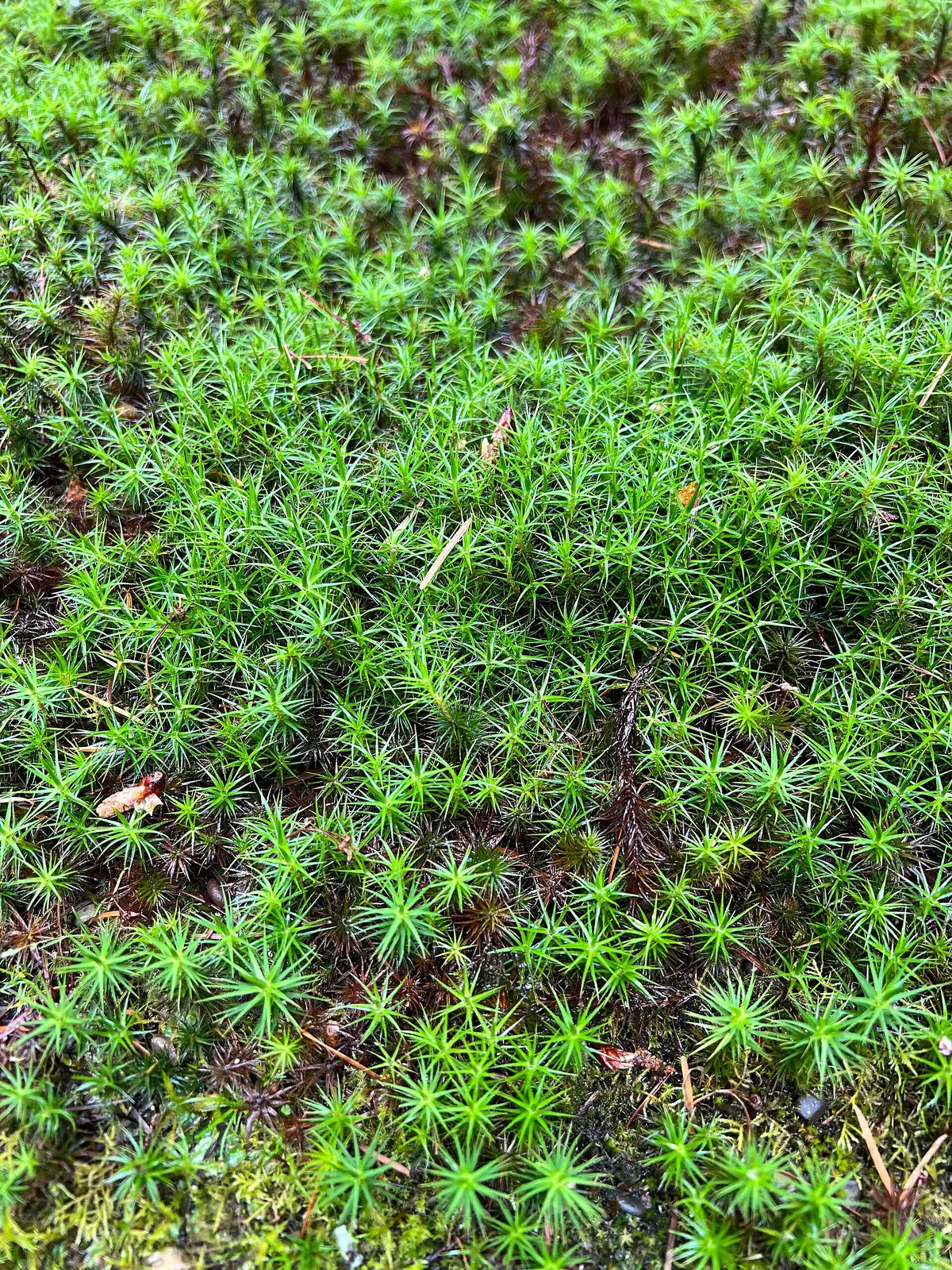
Shade, drainage and thin turf can favor moss even when lime is not the right intervention.
Photo: Z3lvs · CC0 · Resized for layoutOpen larger photoAsk the laboratory for a lawn recommendation
A pH result tells you how acidic the sample is; it does not by itself specify a bag count. Lime requirement also depends on the soil’s buffering capacity. Two soils with the same pH can need different amounts, so ask for an interpretation for established turf.
Give the laboratory the grass type if you know it and explain whether the sample represents an established lawn or a new seedbed. Read the report’s units and ask about any unclear instruction. Do not copy a garden-bed rate onto the lawn or a neighbor’s rate onto a different soil.
Choose lime by composition and the report
Calcitic agricultural lime supplies calcium carbonate; dolomitic lime also supplies magnesium. The extra magnesium is useful when it is needed, not automatically better because the bag sounds more complete. Keep the soil report beside the product analysis while comparing materials.
Pellet size, fineness and neutralizing value influence handling and how a recommendation translates to a product. Use a lawn-appropriate material. Do not substitute caustic quicklime or hydrated lime for agricultural limestone.
| Report or site finding | Next step |
|---|---|
| Lime is not recommended | Address the actual lawn problem rather than adding lime by habit |
| A lime requirement is provided | Check the units and match the rate to the specific product |
| Magnesium is also deficient | Ask whether dolomitic limestone fits the recommendation |
| The lawn includes acid-loving planting beds | Keep the lawn treatment away from plants with different soil needs |
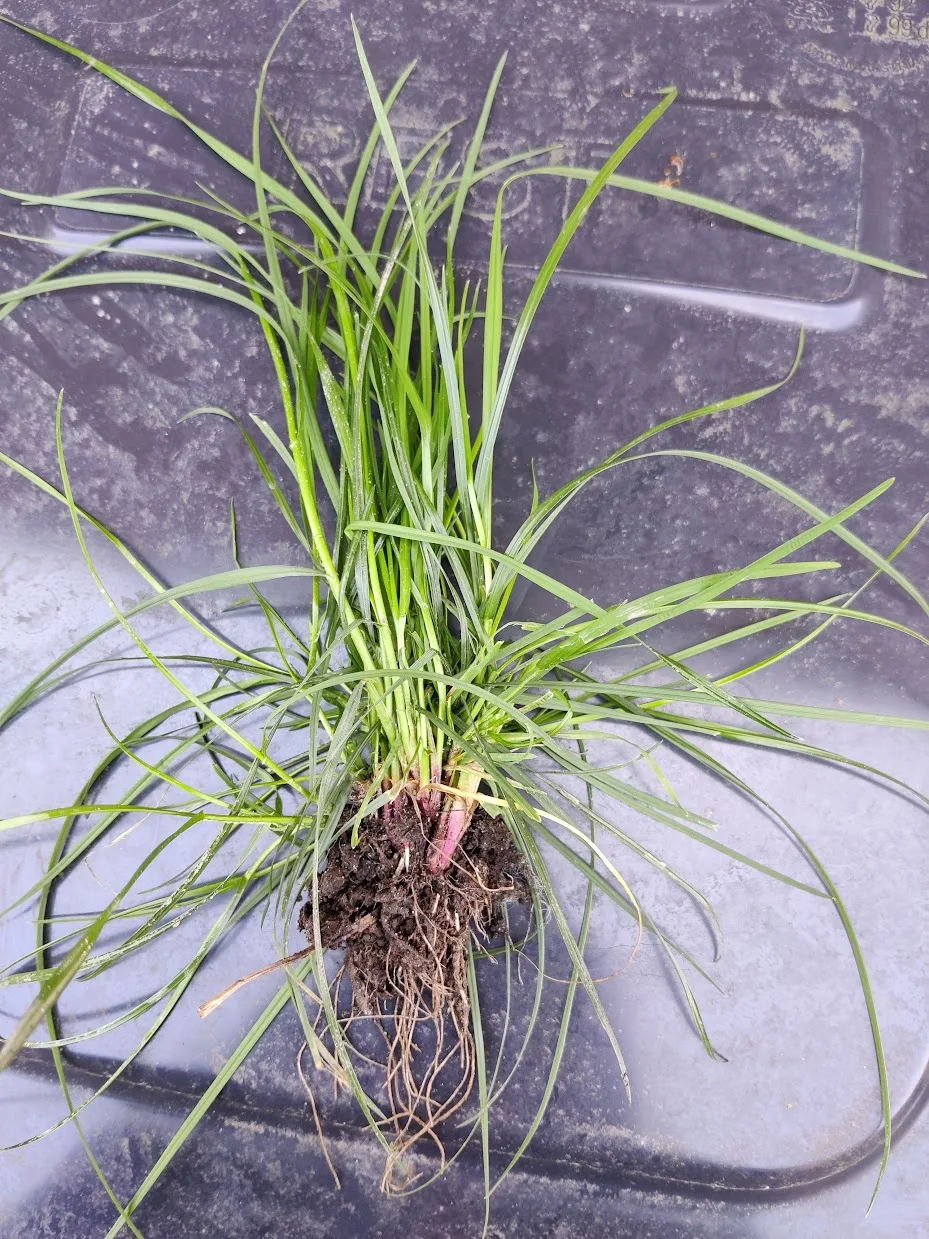
The target growing conditions depend on the lawn, not just the product on the shelf.
Photo: Aramvk · CC BY 4.0 · Resized for layoutOpen larger photoApply a measured amount and keep the record
Measure the lawn area and calibrate the spreader for the chosen product. Follow the laboratory and product instructions, including whether a large requirement should be divided into separate applications. Keep dust and granules off people, pets, paved surfaces and nearby beds as directed.
Save the date, product and measured amount with the report. Lime is not an instant color treatment, so do not keep adding it while waiting for a response. Retest at the interval advised for your soil and management plan, then compare results before buying more.
Questions that come up
Will lime kill moss?
No. It can correct acidic soil when a test shows a need, but it has no direct effect on existing moss. Light, drainage and grass density still need attention.
Does every PNW lawn need lime in autumn?
No. Need and rate depend on the soil and grass. Timing does not turn an unnecessary application into a useful one.
Is dolomitic lime always the best choice?
No. It adds magnesium as well as calcium. Use it when that composition fits the soil recommendation.
Sources & further reading
Independent guidance, with regional extension and primary references. The linked product label and local conditions take priority over a generic schedule.
- Managing moss in lawns in Western Oregon (EM 9175)Oregon State University Extension
- Soil pH and LimingUMass Amherst Extension Turf Program
- Maintaining an Established LawnUniversity of Maryland Extension