A Bend or Redmond lawn needs an inland plan. Do not copy a Portland rain-only summer routine or move a renovation date across the Cascades without checking the growing time available. Begin with the OSU central Oregon calendar, your water provider and the conditions on your property.
- Use central Oregon guidance for timing instead of the western lowland calendar.
- Check the current rules for the utility that serves your address.
- Plan established-lawn irrigation as well as the separate needs of new seed.
Check how cold your site is
Bend, Redmond, Sunriver and La Pine do not share one dependable frost date. A central Oregon plan must account for elevation, exposure and local cold pockets. A yard that stays snowy or frozen longer may fit the mountain checklist better than the warmer part of the nearest city.
OSU’s lawn maintenance calendar for central Oregon describes typical growth patterns and timing. Use it as a reference alongside what the lawn is doing this year, not as a promise that a fixed mowing or feeding count applies at every address.
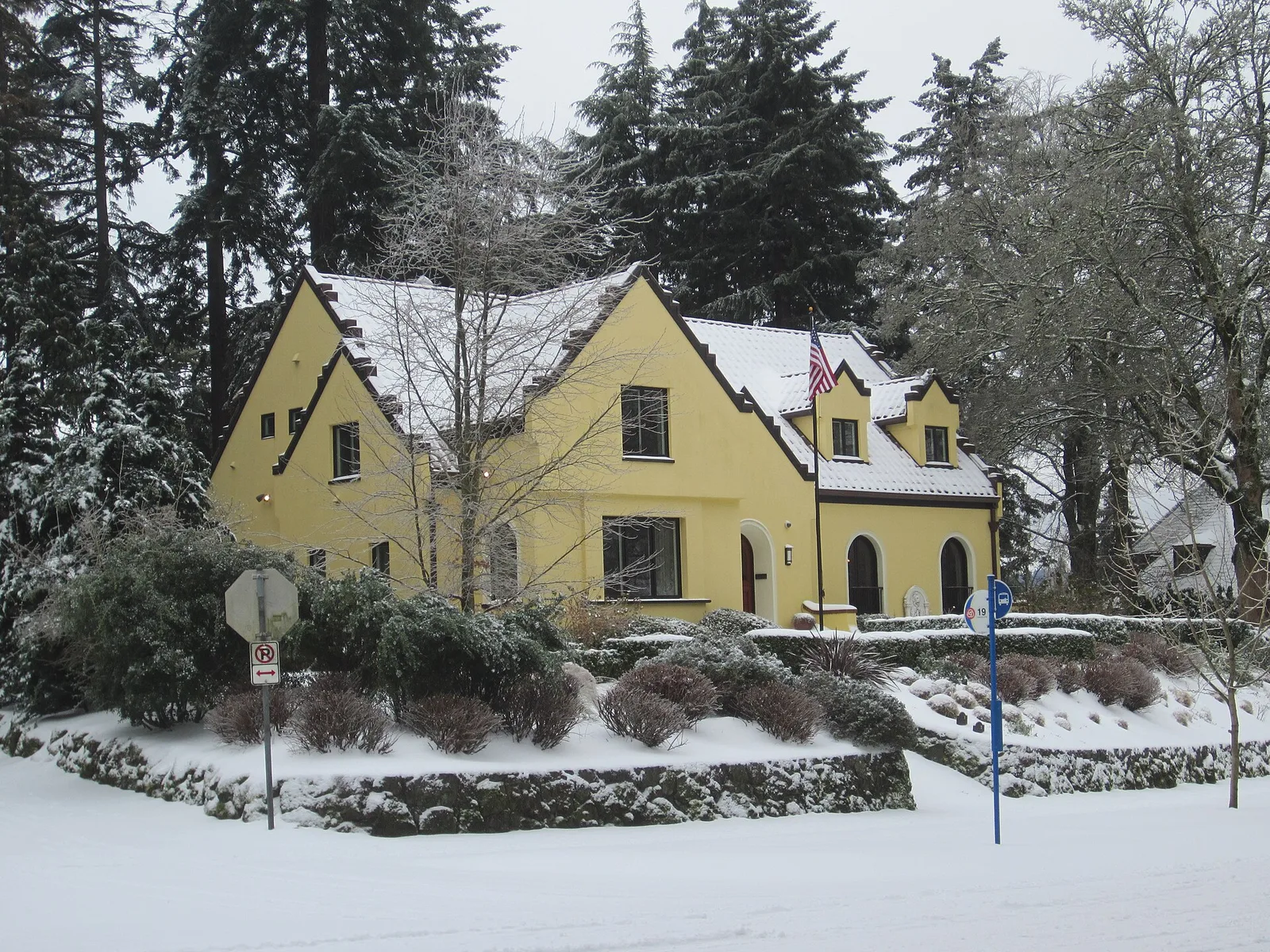
Snow is a seasonal condition example; this photo is from Portland, not a Bend site.
Photo: Another Believer · CC BY-SA 4.0 · Resized for layoutOpen larger photoKnow your irrigation provider and current rules
The City of Bend publishes outdoor watering rules, including permitted schedules and measures to prevent waste. Its rules apply to its service, so do not assume the same arrangement for Redmond or a different utility. Open the current provider page before programming the controller.
Write the provider and permitted schedule beside the controller. Review restrictions when conditions change and plan any establishment exemption directly with the provider. Do not use a general lawn article as evidence that an exception has been granted.
| Starting resource | What to check |
|---|---|
| OSU central Oregon lawn calendar | Typical growth and appropriate maintenance windows |
| Your water provider’s rules | Permitted days, hours, waste restrictions and any establishment process |
| City of Bend smart scheduling guide | Coverage, precipitation rate and adjustments to runtime |
Measure summer water instead of guessing
OSU distinguishes interior Oregon turf from western Oregon lawns that may persist with accepted summer dormancy. Do not assume an inland lawn will survive the same no-irrigation approach. Match irrigation to the grass, rooting conditions and current local guidance.
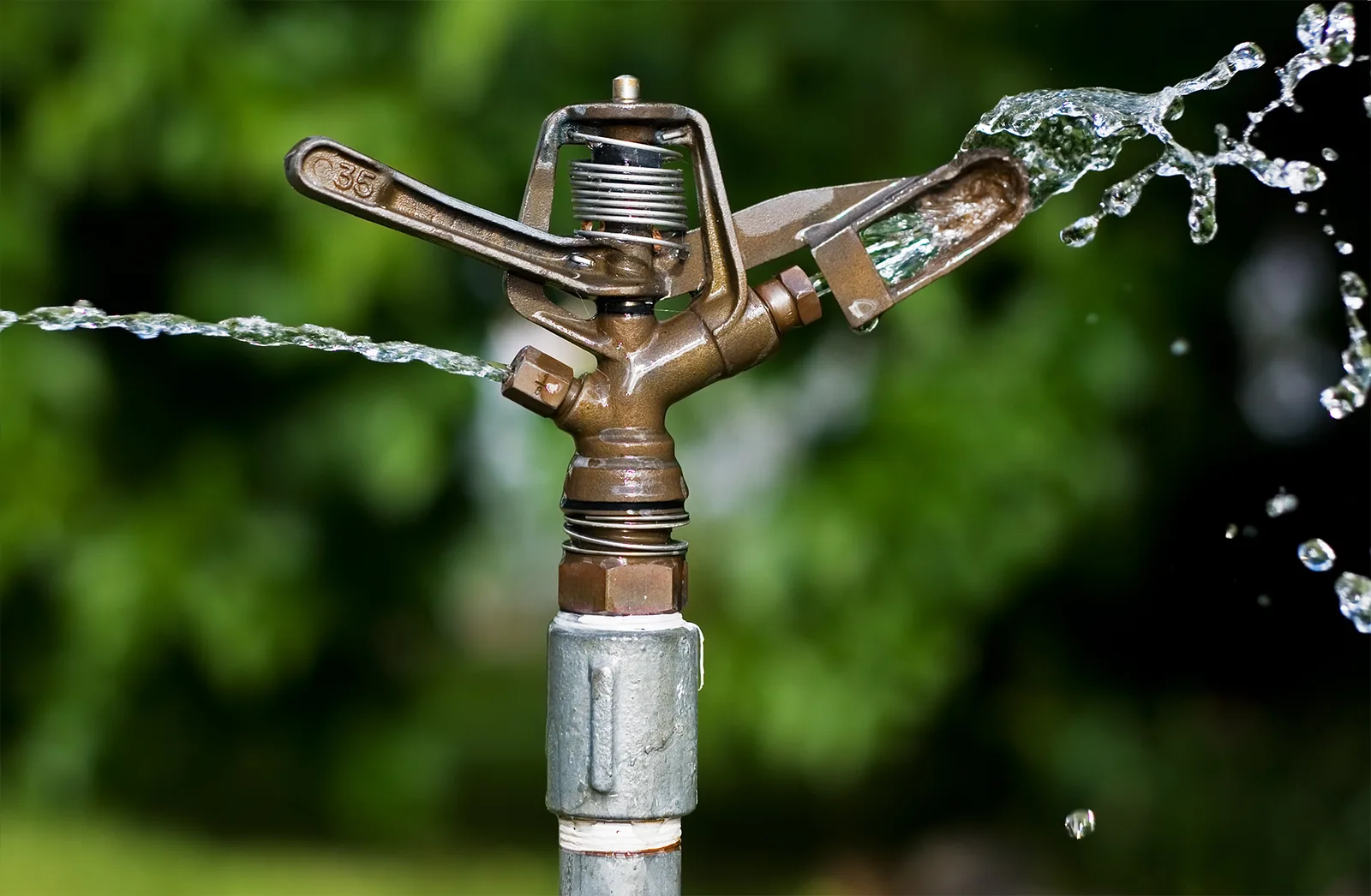
Bend’s smart-scheduling resources explain why measuring sprinkler output matters. Use catch cans to compare coverage, then calculate a suitable runtime. A zone beside pavement, a windy edge and a sheltered lawn can behave differently even when the timer starts them together.
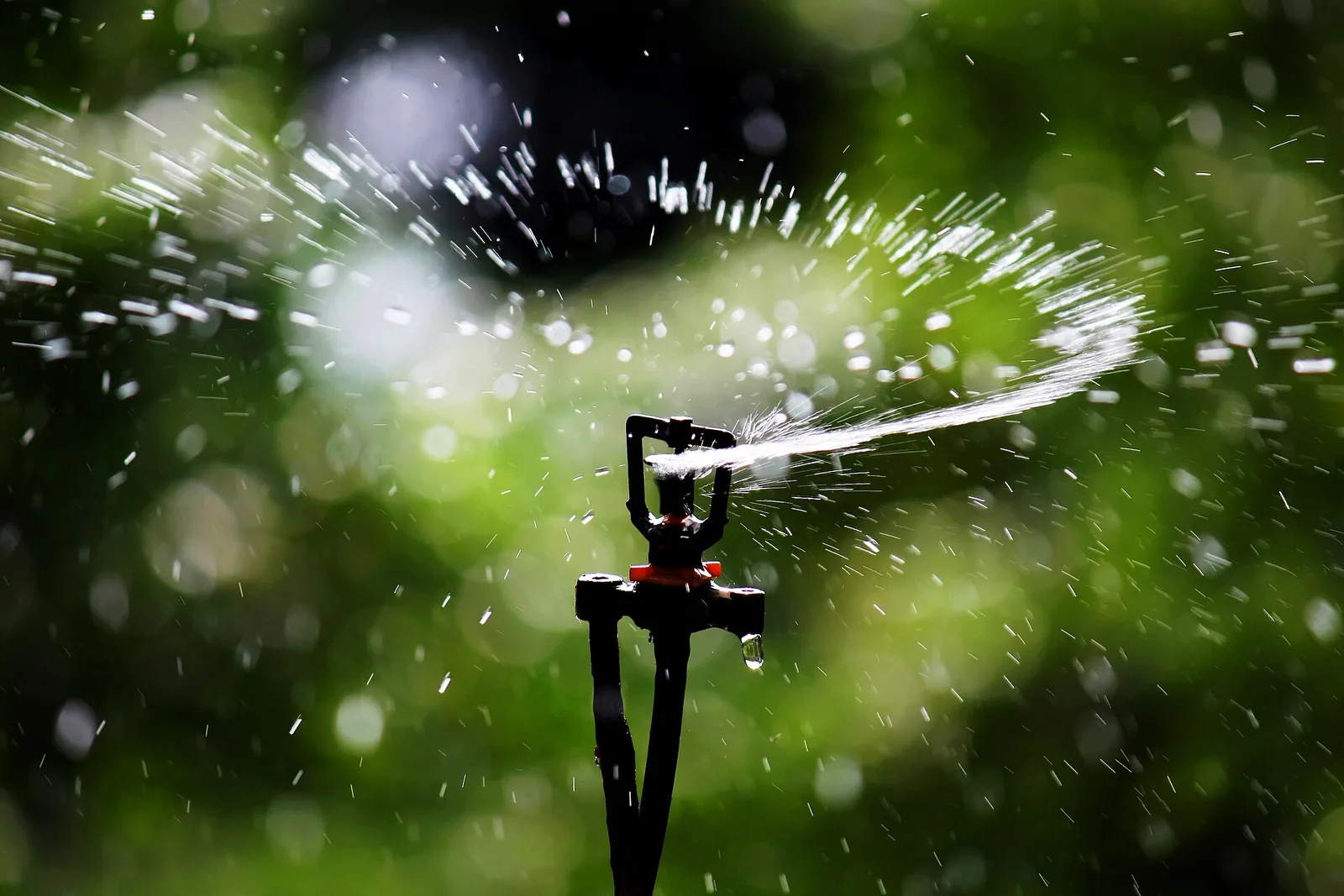
Check your provider’s rules, coverage and soil before setting runtime.
Photo: Anton · CC BY-SA 4.0 · Resized for layoutOpen larger photoLeave enough season for repairs
Before seeding a damaged area, identify the grass and allow a realistic establishment window. If frost is close, use local Extension advice rather than trying to force growth with extra fertilizer. Protect young grass from traffic and keep its water plan separate from established turf.
Note when the ground thaws, when growth begins and which areas dry first. Keep winter equipment off frozen or soft turf where practical. A few observations from your own yard are more useful than a long list of tasks copied from another climate.
Questions that come up
Can a Bend lawn follow Portland’s summer dormancy advice?
Do not assume so. Interior Oregon turf needs an irrigation plan appropriate to local conditions; the western rain-only option does not transfer automatically.
Do Bend watering rules apply in Redmond?
Check your own provider. A regional guide does not replace the current rules of the utility serving your address.
Sources & further reading
Independent guidance, with regional extension and primary references. The linked product label and local conditions take priority over a generic schedule.
- Lawn maintenance calendar for Central OregonOregon State University Extension
- Outdoor watering regulationsCity of Bend
- Smart irrigation schedulingCity of Bend
- Irrigation rates and frequencies for Western and Eastern Oregon turfgrass (EM 9311)Oregon State University Extension