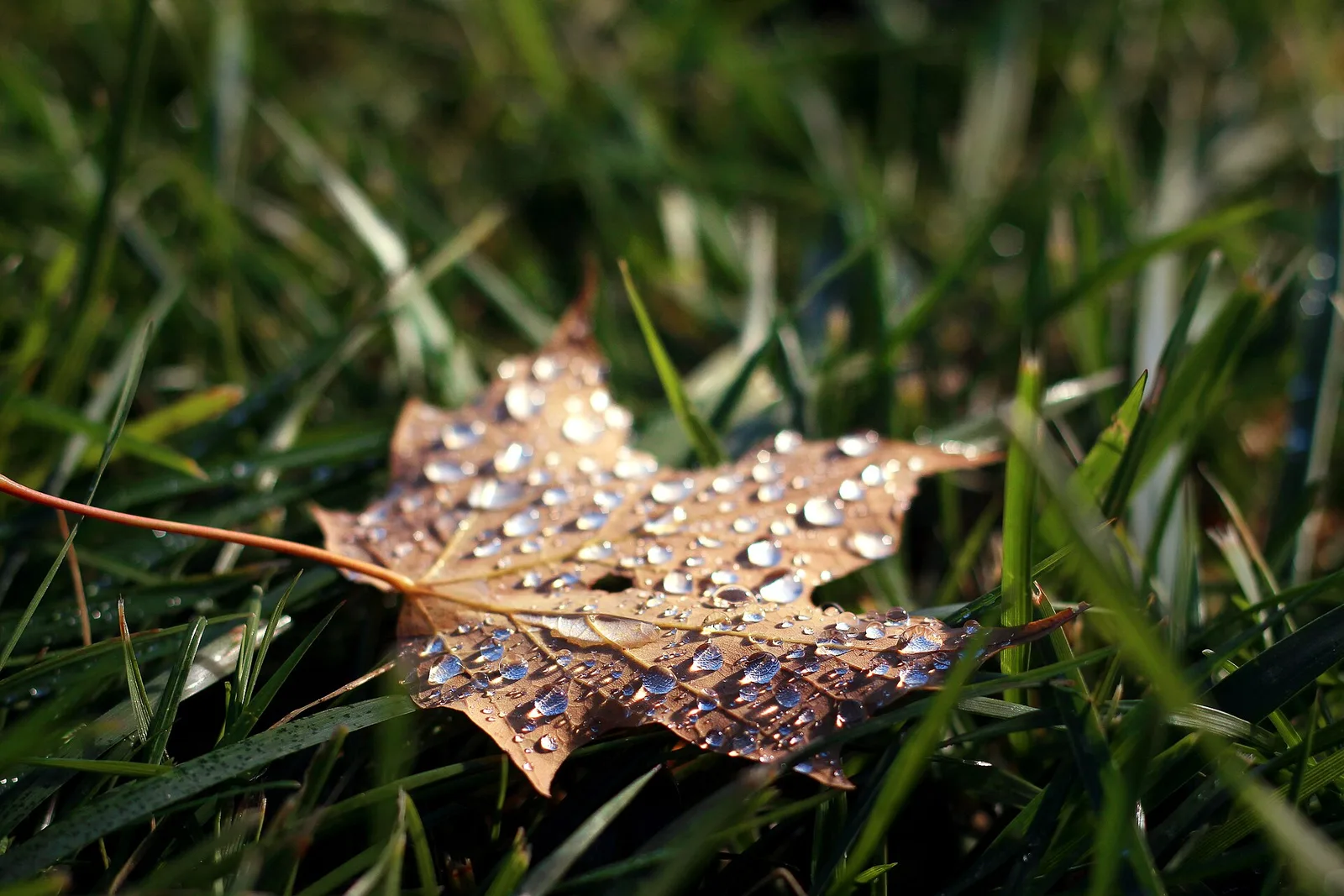
A heavy wet blanket of leaves and a thin scatter of dry leaves are different lawn jobs. The goal is to keep living grass exposed while putting suitable leaves to work elsewhere. You can protect the play area without stripping every bed of winter cover.
- Lift matted leaves that hide grass and hold together after rain.
- Mulch a light dry scatter only if small pieces disperse without covering turf.
- Keep leaf litter in suitable beds, clear of trunks, crowns and drainage routes.
Start with the material that smothers grass
Check beneath maples, along fences and in the low corner where wind collects debris. Lift thick wet layers rather than waiting for the entire property to finish shedding. Work from firm ground when possible so leaf cleanup does not create wheel ruts or compact a saturated lawn.
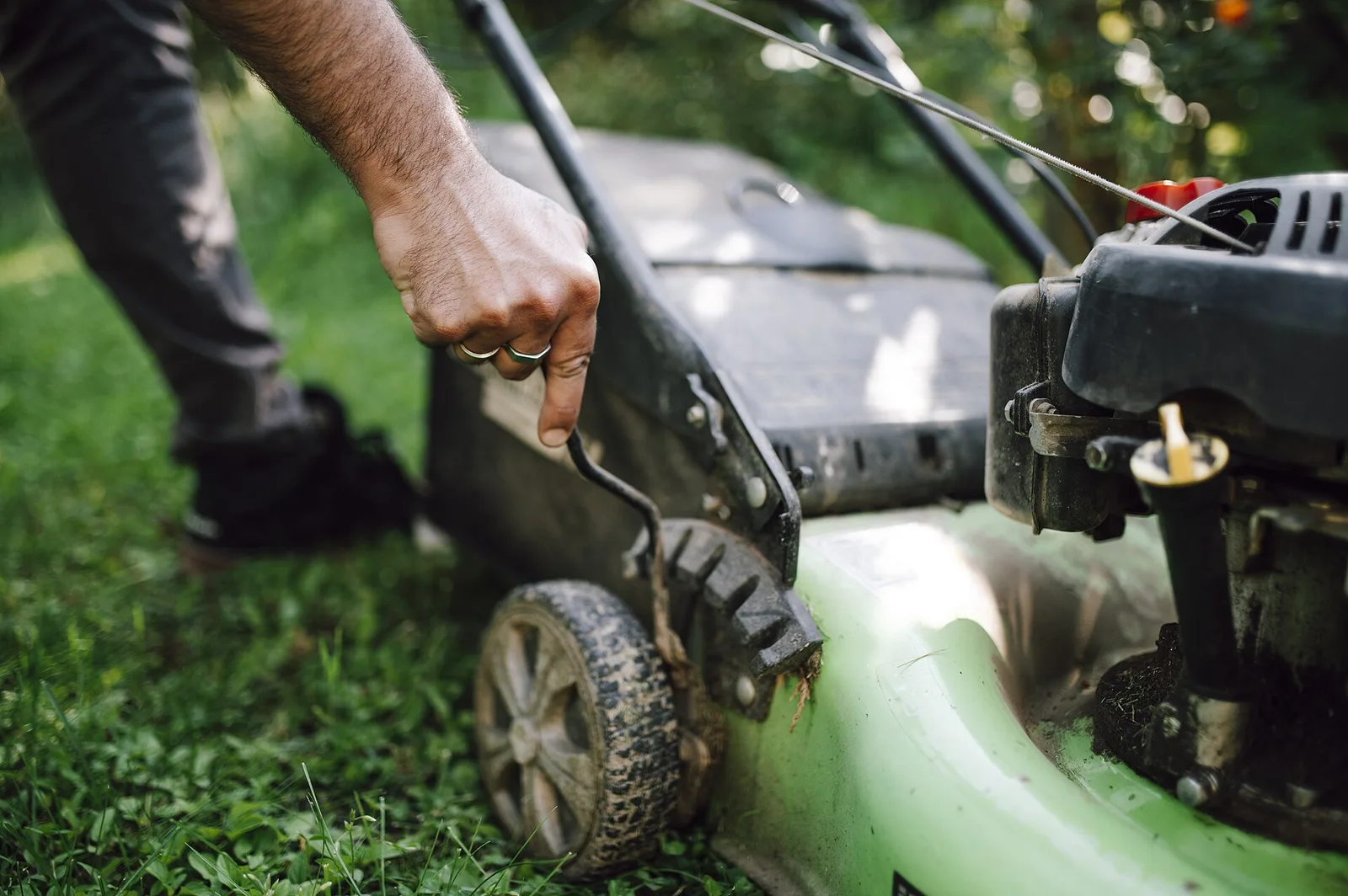
A modest dry scatter can sometimes be chopped with an appropriate mower and left as small dispersed pieces. Reassess the result: if leaves form a mat, cover the blades or repeatedly clog the mower, collect them instead. Follow the mower's instructions, and remove stones, sticks and other debris before a pass.
Keep useful litter off the turf
Move suitable leaves into a planted bed, a managed leaf-mold area or the compost system. Whole leaves can provide shelter for beneficial organisms; shredding can make material easier to spread and less likely to mat. Choose an area where the litter can remain without burying small plants or blocking emerging growth.
Spread material loosely and keep it away from tree trunks and shrub crowns. Do not build a leaf volcano at a tree base or use a thick pile to cover exposed roots. A visible gap near the trunk also makes inspection for bark damage easier. Conifer needles can be useful surface mulch in an appropriate planting bed; a dense layer over grass still needs attention.
Finish with paths, water and the next storm
Keep walking surfaces and drainage routes clear. Do not blow debris toward storm drains or into the street outside an authorized local collection arrangement. For public drains, follow your city's guidance: clear only accessible surface debris from a safe position, never lift the grate, and report a blockage you cannot safely reach.
Let the landscape set the cleanup rhythm. West-side and coastal rain can turn leaves into mats quickly; wind and snowmelt create different collection points inland and at elevation. Inspect after storms rather than forcing a single large annual cleanup. Keep any leaves with a diagnosed disease or pesticide restriction separate until you check the relevant disposal guidance. Renters should agree on who handles trees, shared paths and collection with the property manager.
Questions that come up
Should I leave all the leaves where they fall?
Keep habitat where it suits the landscape, but move thick leaf layers off living turf, paths and drainage routes. A planted bed can retain litter while the lawn stays exposed.
Can every pile go through the mower?
No. Wet mats, heavy accumulations, sticks and stones are reasons to collect first. Mulch only suitable material with the manufacturer's approved mower setup.
Sources & further reading
Independent guidance, with regional extension and primary references. The linked product label and local conditions take priority over a generic schedule.
- Should I leave fallen leaves in my flower beds?Oregon State University Extension
- Mulching woody ornamentals with organic materialsOregon State University Extension
- Adopt a storm drainPortland Bureau of Transportation
- Master Gardener Articles: leaves and lawn maintenanceWashington State University Extension, Chelan and Douglas Counties