A rainy afternoon is a useful time to sort the shed. The goal is to make existing equipment ready for the next job, while identifying the few items that need repair or replacement. Start with hand tools and follow the manufacturer's instructions for powered equipment.
- Clean away soil and let tools dry before storage.
- Inspect handles, joints, blades and safety features.
- Follow the manual for batteries, fuel and sharpening.
Clean before you assess the damage
Remove stuck soil with a suitable brush or scraper, then clean and dry the tool. Keep debris from invasive plants or suspected disease out of areas where it could spread. Cleaning and disinfection are different steps; use plant-health guidance where disinfection is needed.
Set aside tools with cracked handles, loose heads or damaged blades. A sharp edge does not make an unsound tool safe. Compare repair parts and local sharpening services before replacing an otherwise serviceable item.
Maintain only what you can do safely
Use the maker's sharpening method and appropriate protective equipment. Secure the work and keep fingers clear of cutting edges. Follow the manual before removing mower blades or doing anything near stored mechanical energy.
Apply a suitable protective oil only where the tool instructions call for it. Store lubricants and used cloths safely and follow disposal directions. Powered equipment, batteries and fuel systems require their own storage routine, not a generic instruction copied from a hand pruner.
Give each tool a safe place
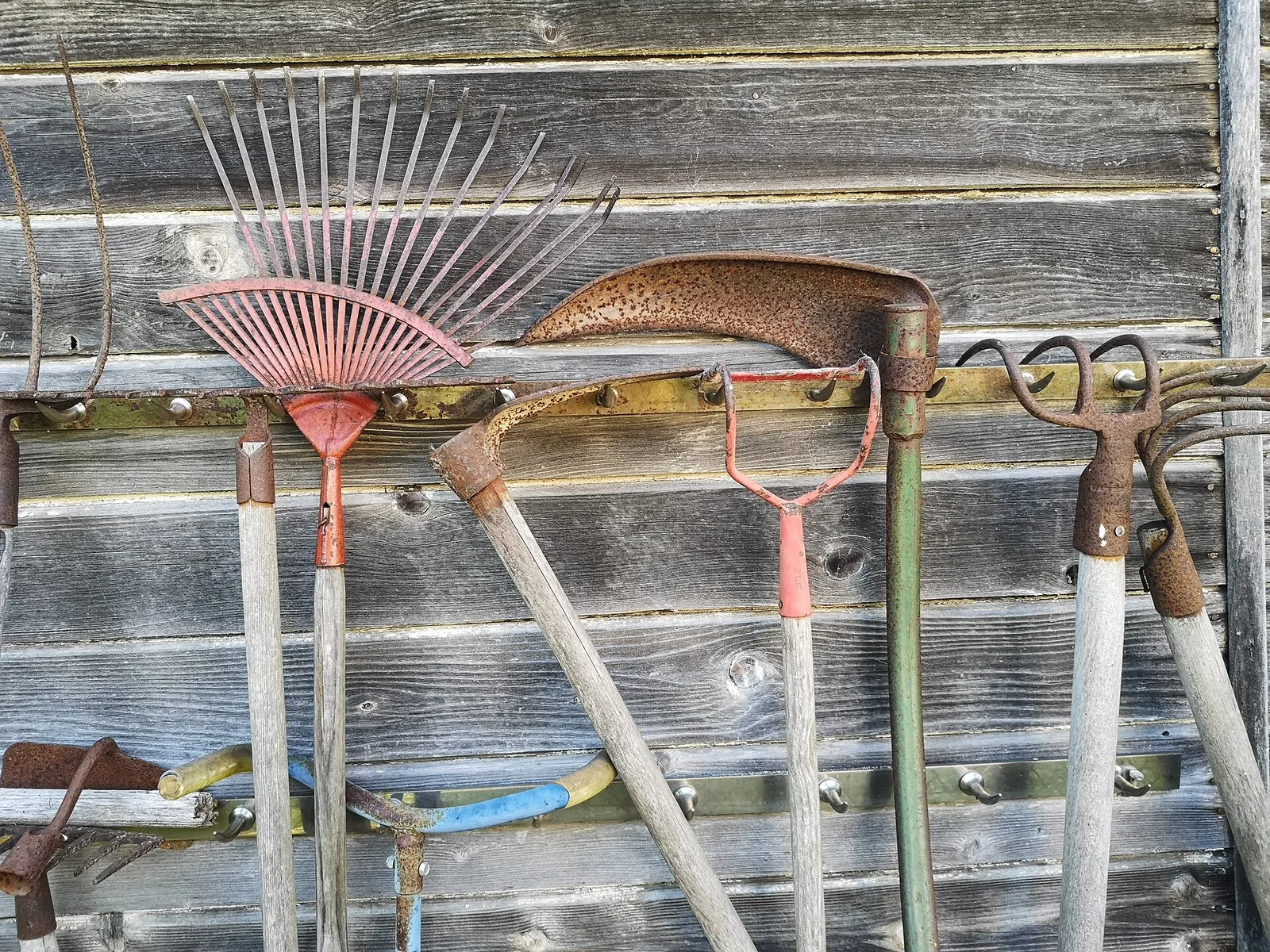
Choose storage that keeps tools dry, stable and clear of walkways. Check the wall and fixings before loading a rack. Place sharp edges so they cannot fall onto people or animals, and keep small parts where they can be found next season.
Make a short repair list with the exact model and part needed. A missing washer or worn blade may be the whole job. Revisit items used only once and consider whether borrowing next time would free space without making garden work harder.
Questions that come up
Should I replace every rusty tool?
Surface rust and structural damage are different. Clean and inspect first, then use the manufacturer's repair guidance or a qualified service.
Can I keep a battery in an unheated shed?
Use the battery maker's permitted storage temperatures and charging instructions. Do not assume the garden-tool storage advice covers batteries.
Sources & further reading
Independent guidance, with regional extension and primary references. The linked product label and local conditions take priority over a generic schedule.
- How should I prepare my garden tools for winter?Iowa State University Extension
- End-of-season garden tasks make for a smoother start in springOregon State University Extension
- FELCO 2 hand prunerFELCO North America