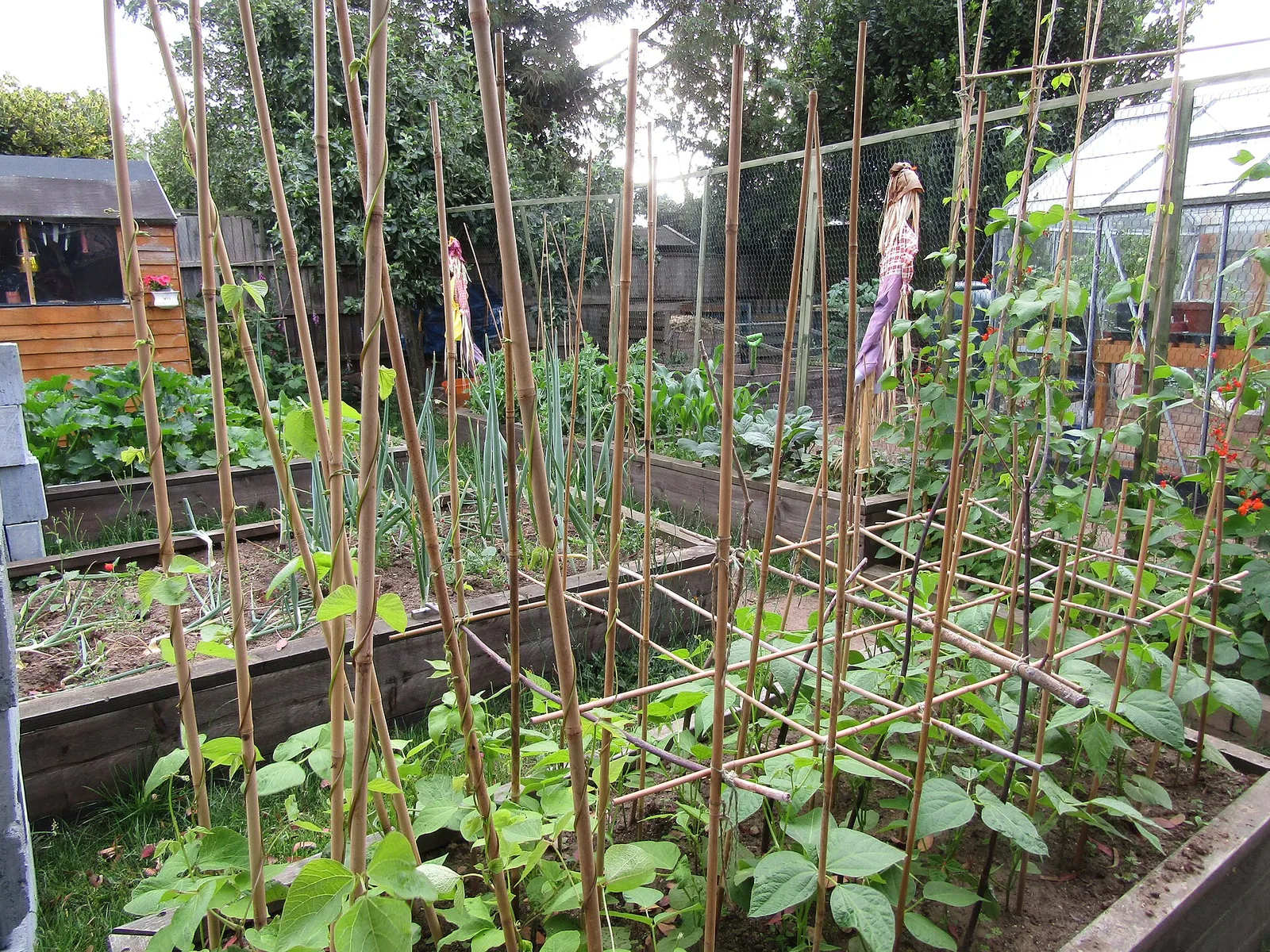
Raised beds organize a small garden and keep feet out of growing soil. They can make a wet western garden easier to manage, but the frame alone does not solve poor siting, contaminated soil or summer irrigation.
- Choose sun, access and a water source before choosing a frame.
- Fill with a suitable soil mix rather than compost alone.
- Measure the bed before ordering soil; volume adds up quickly.
Start with the place you can maintain
Mark the bed and paths with a hose or string. Reach toward the center from every working side and shrink the width if that reach is uncomfortable. A narrow bed against a fence needs a different layout from one accessible on both sides. Leave enough path space for the way you actually move: a watering can, wheelbarrow or mobility aid.
Vegetables generally need a sunny site and soil that drains. Observe the location after rain before filling a frame. Avoid directing water toward a foundation or neighboring property. For a rental, agree the location, materials and eventual removal with the owner; movable containers may suit a short tenancy better.
Calculate soil before delivery
For a rectangular bed, multiply inside length by width by fill depth, all in feet. Divide cubic feet by 27 for cubic yards. A 4-by-8-foot bed filled 1 foot deep takes about 32 cubic feet, or 1.19 cubic yards, before allowing for settlement. This is a geometry example, not a recommended depth for every crop.
Ask what is in a bulk mix and whether the supplier can describe compost maturity and soil quality. Compost improves soil but continues decomposing; filling a bed entirely with compost can create nutritional, salt and settling problems. Where native ground is clean and suitable, incorporate the transition thoughtfully rather than creating an isolated box of radically different material.
Build a simple first season
Plant a few crops you eat regularly instead of filling every space immediately. Mark the sowing date, variety and intended spacing. Water the actual root zone and check beneath the surface; a shallow new seedbed dries differently from a mature plant’s roots.
Keep traffic on the paths. Add nutrients according to the crop, soil test and product label, accounting for amendments already in the purchased mix. An organic label does not make unlimited fertilizer or compost useful. In interior and mountain gardens, expect a different planting window from a western lowland yard.
Keep a useful record
At season’s end, note which corners stayed wet, which crops shaded their neighbors and which paths were too tight. Photograph the layout before changing it. That record helps you improve the next bed rather than buying a larger frame to repeat the same problem.
Cover or protect idle soil appropriately through the wet season, and keep persistent weeds from establishing at the edges. Recheck the fill level before spring planting; some settlement is normal as organic material decomposes.
Questions that come up
Can I fill a raised bed with straight compost?
Use a suitable soil mix. Compost alone is not a dependable long-term growing medium for a vegetable bed.
Will a raised bed fix every drainage problem?
No. The underlying soil, runoff routes and location still matter. Persistent ponding needs investigation before construction.
Sources & further reading
Independent guidance, with regional extension and primary references. The linked product label and local conditions take priority over a generic schedule.
- Raised bed gardeningOregon State University Extension
- How to use compost in gardens and landscapesOregon State University Extension
- Vegetable gardening in OregonOregon State University Extension