An invasive-plant job starts with identification and a plan for the waste. Cutting a patch down can make it look controlled while leaving the parts that will restart it.
- Confirm the species before disturbing it.
- Keep suspect root, soil and stem fragments from moving to new sites.
- Budget for follow-up and replacement planting, not only the first clearance.
Make an inventory before clearance
Photograph leaves, stems, growth habit and flowers or fruit when present. Map the patch boundaries and note drains, streams, property lines and neighboring infestations. A few new plants at an edge can be a more manageable first job than the center of a large established stand.
Use your county or state weed program to confirm both identification and current local obligations. Noxious-weed status and required control vary. Renters should report substantial infestations and agree any treatment or removal with the owner.
Know three common problems
These are introductory clues, not a complete identification key.
| Plant | Clues to investigate | A mistake to avoid |
|---|---|---|
| Himalayan blackberry | Robust thorny canes; commonly five leaflets, sometimes three | Assuming every blackberry is invasive; trailing blackberry is native |
| English or related invasive ivy | Evergreen climbing vines and mats; juvenile and mature leaves can differ | Pulling heavy overhead vines down from a tree |
| Invasive knotweed | Dense seasonal canes and an extensive spreading below-ground system | Mowing or moving contaminated soil and fragments to another bed |
Choose a method and disposal route together
For a small, positively identified patch, manual work may be practical with appropriate tools and protection. A large infestation, a steep bank or work beside water calls for specialist advice. Repeated cutting can suppress some plants without eliminating the root system.
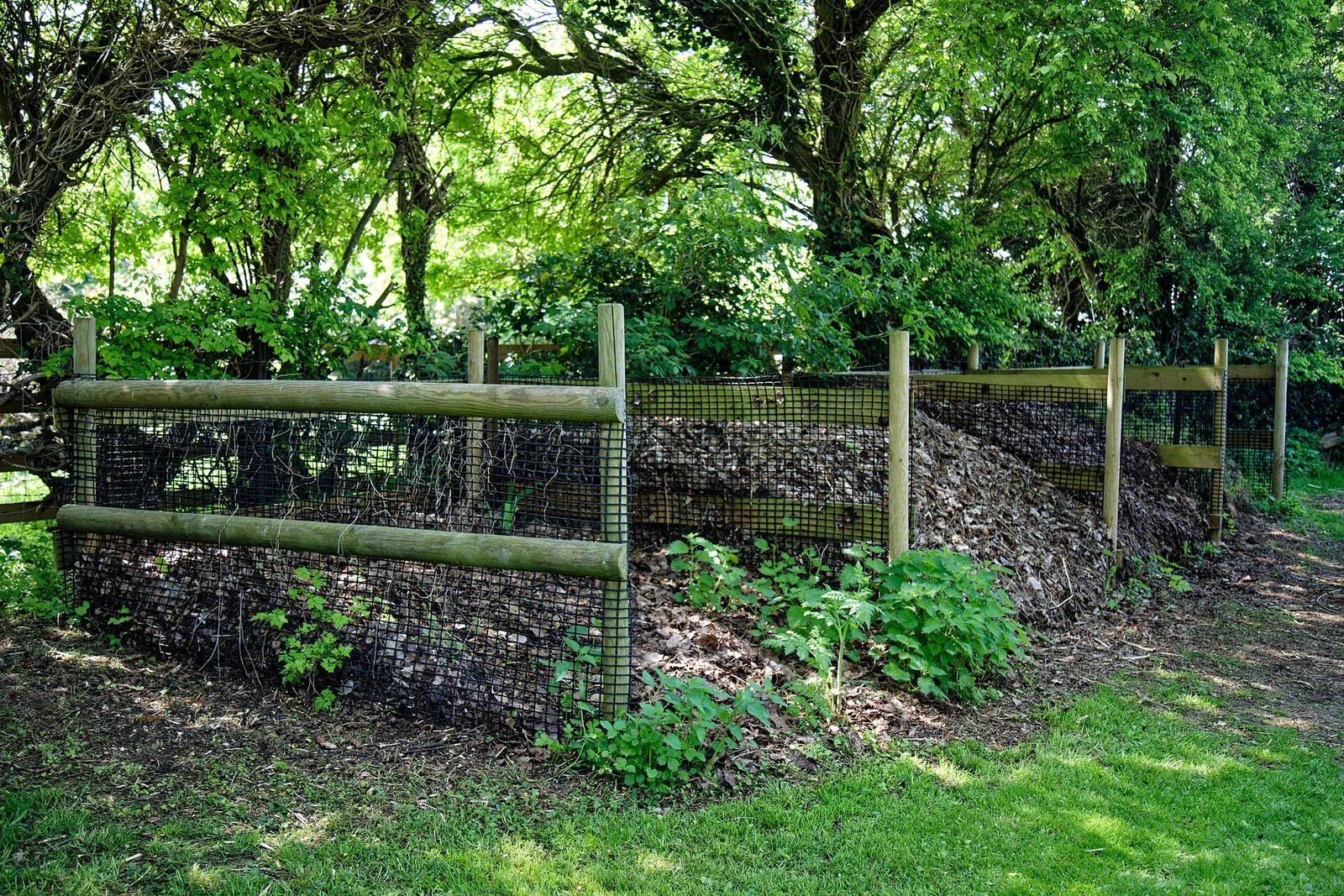
Do not put invasive knotweed into ordinary home compost or distribute affected soil. Other invasive debris also needs the correct local disposal route, particularly material carrying seeds or able to root from fragments. Confirm the waste service’s rules before filling the trailer. Clean soil and fragments from equipment before moving to another area.
Make the cleared area harder to recolonize
Return regularly to look for regrowth and new seedlings. Record the date and location instead of relying on memory. Replant appropriately where removal exposes bare soil, while protecting drainage and existing desirable plants.
If herbicides are part of the plan, use a currently labeled product for the species and site, with all required protections and permissions. A method appropriate for a dry yard may be inappropriate near water. Avoid blanket recipes or unlabelled homemade mixtures. The objective is a stable, maintainable replacement landscape, not one dramatic weekend photograph.
Questions that come up
Can I just mow knotweed until it is gone?
Mowing can spread viable fragments and is not a dependable elimination method. Get species- and site-specific advice before disturbing a patch.
Does removing all visible ivy finish the job?
No. Roots, regrowth and new seedlings can require repeated follow-up, and replacement planting may be needed.
Sources & further reading
Independent guidance, with regional extension and primary references. The linked product label and local conditions take priority over a generic schedule.
- Himalayan blackberryOregon State University
- IvyOregon State University
- Invasive knotweed identification and controlKing County Noxious Weed Control Program
- KnotweedOregon State University